
Why Can an In-Spec PP Roll Still Cause Wrinkles, Weak Seams, and Size Variation?
A roll labeled 80 g/m² may still vary across its width, contain hard spots, telescope during unwinding, or deliver different strength in the machine and cross directions. These defects become expensive on an automatic line because web tension, photoelectric tracking, ultrasonic welding, folding, and cutting all depend on consistent material. Operators often compensate by changing pressure or speed, which hides the incoming-material problem and destroys recipe control. A certificate showing only nominal GSM is therefore insufficient. The buyer needs a roll specification, sampling plan, test methods, visual defect rules, and a controlled machine trial. Without these items, a Manufacturer may approve one laboratory sample while production receives a different roll construction. A reliable Supplier must prove both material properties and converting behavior before the fabric becomes an approved OEM or ODM input.
The best qualification plan combines roll identity, width and winding checks, ISO 9073 basis-weight and strength tests, visual mapping, and a production trial. Zhengxin matches approved PP spunbond rolls to the machine’s web path, ultrasonic process, bag geometry, and target speed.
The following method helps importers, converters, and quality teams turn a vague fabric description into measurable acceptance criteria. It explains which tests belong in incoming inspection, how roll defects should be mapped, when Supplier changes require requalification, and which performance questions still need an actual Customizable bag-making trial.
Write a Converting Specification Instead of Ordering by GSM Alone
Start with the finished bag and work backward. The material specification should identify polymer, spunbond construction, nominal mass per unit area, thickness, roll width, roll diameter, core size, color, surface treatment, bonding pattern, and winding direction. Include recycled content, lamination, printing treatment, antistatic additives, or UV stabilization when relevant.
- Define tolerances contractually; do not assume the Supplier uses the buyer’s normal limits.
- State whether width includes trim allowance and which edge is the machine reference.
- Specify maximum roll diameter and mass against the unwind capacity.
- Identify the printable or treated side and the approved direction of unwinding.
- Link every approved material code to bag styles, weld recipes, and speed limits.
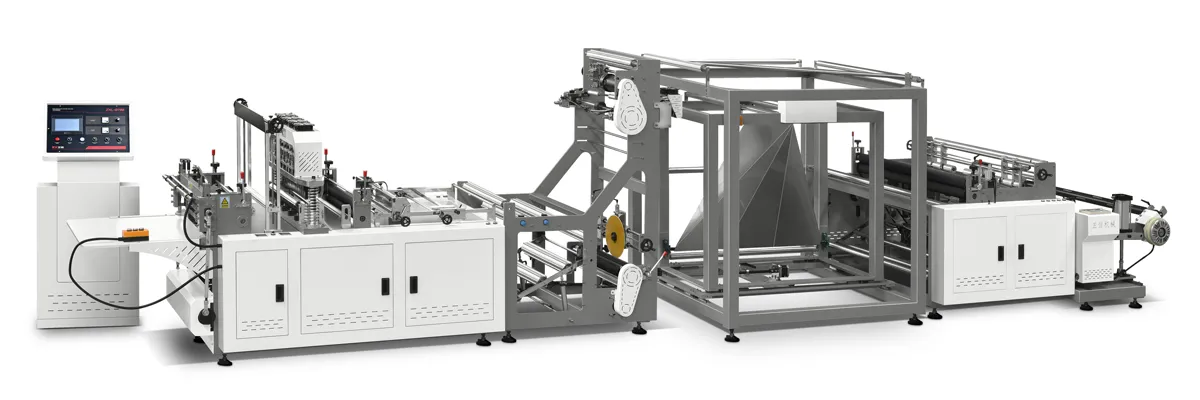
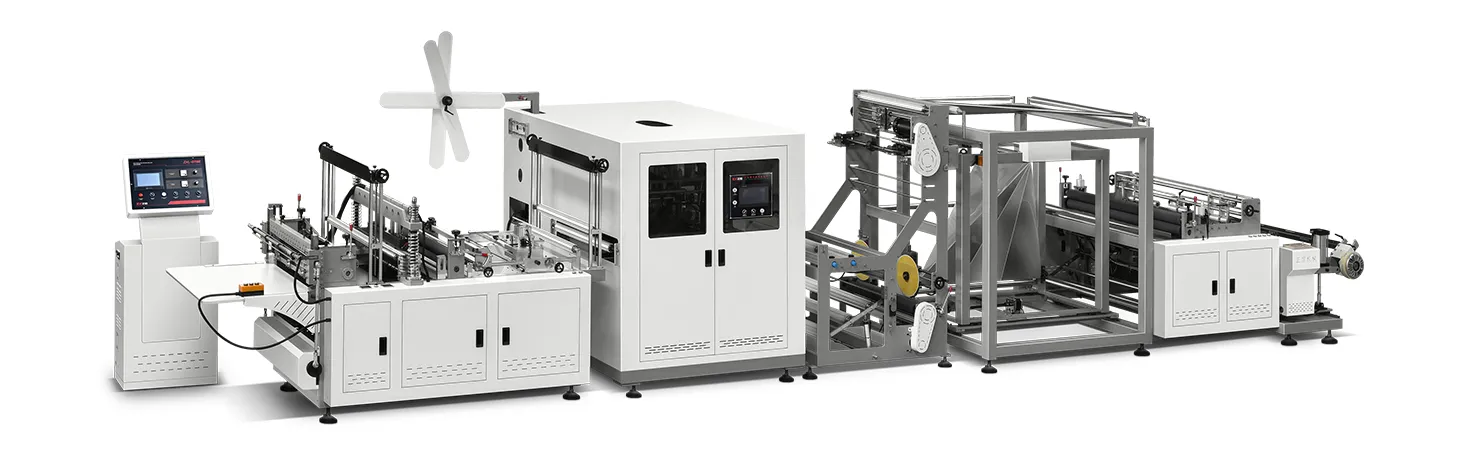
Zhengxin machines cover different published material and width ranges. For example, the ZXL-A700 Ultra and ZXL-B700 list 30–120 g/m² material and 500–1300 mm roll width. Those machine limits do not replace a narrower product-specific fabric specification.
Use Current Nonwoven Test Methods for Comparable Data
Test reports become useful only when both parties use the same method, conditioning, specimen direction, and units. ISO 9073-1:2023 covers mass per unit area. ISO 9073-2:1995 covers thickness under specified pressure. ISO 9073-3:2023 covers strip tensile strength and elongation, while ISO 9073-4:2021 covers trapezoid tear resistance.
| Property | Reference direction | Why it matters on the line |
|---|---|---|
| Mass per unit area | ISO 9073-1:2023 | Influences cost, stiffness, welding, and bag load |
| Thickness | ISO 9073-2:1995 | Affects nip contact, folding, and layer stack |
| Tensile and elongation | ISO 9073-3:2023 | Supports tension and finished-bag strength decisions |
| Tear resistance | ISO 9073-4:2021 | Reveals propagation risk near cuts and handles |
Set separate machine-direction and cross-direction limits where relevant. A pass against a generic data sheet does not prove suitability for a specific handle, gusset, or ultrasonic pattern.
Sample Across the Width, Length, and Lot
A single specimen from the roll center cannot reveal cross-web nonuniformity. Define a documented incoming inspection sampling plan covering multiple rolls per lot and multiple positions within a roll. Preserve traceability from specimen to Supplier lot, roll number, slit position, production date, and purchase order.
- Inspect packaging and record damage before opening.
- Measure width, diameter, core condition, telescoping, edge alignment, and roll hardness.
- Take specimens from left, center, and right positions using the agreed sampling method.
- Record visual defects on a roll map with distance from the roll start.
- Retain labeled samples and test results for complaint comparison.
Increase sampling when a Supplier changes resin, color masterbatch, bonding pattern, production line, or slit position. Reduced inspection should be earned through stable lot history rather than granted after one passing shipment.
Inspect Winding Quality and Defects That Laboratory Tests Miss
Automatic converting needs a stable web. Inspect for telescoping, starring, crushed cores, loose winding, edge weave, wrinkles, holes, thin areas, hard polymer, contamination, oil, color streaks, bonding defects, and splice quality. Define defect size, frequency, and disposition rules in the purchase specification.
| Roll symptom | Likely production effect | Incoming action |
|---|---|---|
| Telescoped or dished roll | Unstable unwind and lateral tracking | Measure offset and quarantine outside limit |
| Loose or uneven winding | Tension fluctuation and wrinkles | Compare hardness and run a controlled unwind |
| Hard spots or thick bands | Weld burn-through or cutting variation | Map position and inspect thickness profile |
| Unapproved splice | Sensor faults, jams, or product contamination | Verify count, construction, and marking |
| Edge damage | Web wandering and fold misalignment | Check usable width and edge stability |
Photographs should include scale and roll identification. Avoid vague defect language such as good winding or minor holes because it cannot support a commercial claim.
Validate Printing, Tracking, Folding, and Ultrasonic Welding
Laboratory values screen the material, but a production trial verifies conversion. Run the proposed roll through unwinding, automatic web guiding, tension control, photoelectric tracking, folding, gusset forming, ultrasonic sealing, cutting, punching, and stacking required by the target bag. Use the actual ink or laminate if the production roll will be printed.
- Test minimum, normal, and maximum contracted speeds for the selected bag.
- Measure dimension stability and track manual tension corrections.
- Record weld appearance, strip strength, failure mode, and burn-through.
- Count wrinkles, tracking stops, splices, holes, rejected bags, and setup waste.
- Retain a signed golden roll sample and finished bags.
A Customizable OEM recipe should identify fabric code, layer count, tooling, pressure, speed, and accepted operating window. Requalification is required when a material change can affect that window.
Create Supplier Approval and Change-Control Rules
Approve the material, manufacturing site, and process combination rather than only the trading company name. Require a lot certificate containing the agreed results, but verify critical properties independently at defined intervals. Establish notification rules for resin source, recycled content, additive package, pigment, bonding pattern, line, width, treatment, and packaging changes.
Use a non-conformance process that identifies the affected roll numbers, segregates inventory, records machine evidence, and defines replacement or credit. Trend each Supplier’s basis-weight variation, defects, line stops, and yield. Commercial price comparisons should use cost per accepted bag, not cost per kilogram alone.
Send Zhengxin your fabric data sheet, roll dimensions, bag drawing, print requirements, and target speed. Our team can define a Customizable material trial and match the approved PP spunbond roll to the correct OEM or ODM machine configuration.
 English
  العربية
  Español
  Русский
  O‘zbekcha
  Қазақ тілі
  Português (AO90)
  Tiếng Việt
  (فارسی (افغانستان
  Kiswahili
  አማርኛ
አማርኛ  தமிழ்
தமிழ்  Bahasa Indonesia
  اردو
اردو  हिन्दी
  বাংলা
বাংলা