
Rising raw material costs and government plastic bans have forced businesses to rethink packaging—choose the wrong alternative and risk higher costs. Non-woven bags offer a durable, eco-friendly, and cost-effective solution.
Non-woven bags are generally more cost-effective than paper bags when considering durability, reuse potential, and long-term savings. These bags support sustainable practices while reducing replacement frequency and overall packaging costs.
Read on to discover why more businesses are switching to non-woven over paper.
Cost Comparison: Paper Bags vs. Non-Woven Bags
As businesses worldwide respond to growing environmental regulations, particularly plastic bans, the shift toward sustainable packaging has become more than a trend—it’s a necessity. Many enterprises now find themselves choosing between paper bags and non-woven bags. At first glance, paper may appear cheaper. However, when we examine durability, reusability, and production costs over time, non-woven bags consistently emerge as the smarter investment.
Paper bags, although eco-friendly and biodegradable, are often single-use due to their fragility. They are prone to tearing when wet or overloaded, especially in markets, food delivery, and retail environments. Replacing these bags frequently adds up, increasing operational expenses over time. Non-woven bags, by contrast, are made from spunbond polypropylene fibers, which are strong, flexible, and water-resistant. One non-woven bag can be reused dozens—if not hundreds—of times, significantly reducing the need for constant repurchasing.
Moreover, the production of non-woven bags is highly automated and scalable, as exemplified by equipment from companies like Zhejiang Zhengxin Machinery Co., Ltd. Their fully automatic non-woven bag making machines integrate ultrasonic welding technology, ensuring high output, low labor costs, and minimal error rates. This makes mass production not only more efficient but also cost-saving. These machines can produce various bag types including T-shirt bags, shopping bags, and box bags, accommodating diverse market demands with minimal operational adjustments.
Additionally, the customization and branding potential of non-woven bags is far superior. Non-woven materials provide an ideal surface for vibrant, durable printing using specialized non-woven printing machines, reducing marketing and packaging costs in the long term. Businesses can transform each bag into a walking advertisement, extending their brand visibility while maintaining eco-conscious values.
When considering lifecycle cost, non-woven bags outperform paper. A non-woven bag might cost slightly more per unit initially, but it pays off after just a few uses. Paper bags, on the other hand, require constant replenishment, increasing procurement frequency and logistics overhead. For businesses in regions like Africa, Southeast Asia, or Latin America—where infrastructure and import logistics can inflate costs—opting for reusable solutions like non-woven bags brings even greater economic benefit.
Finally, from a compliance perspective, non-woven bags offer a future-proof solution. As more governments enact stricter plastic usage laws, businesses relying on non-reusable packaging will face regulatory risks and potential fines. Investing in non-woven alternatives aligns with both current and anticipated legislation trends.
In short, non-woven bags are not only more economical in the long run, but also enhance brand image, operational efficiency, and environmental responsibility.
Summary
Non-woven bags deliver better durability, lower lifecycle costs, and greater ROI than disposable paper bags.
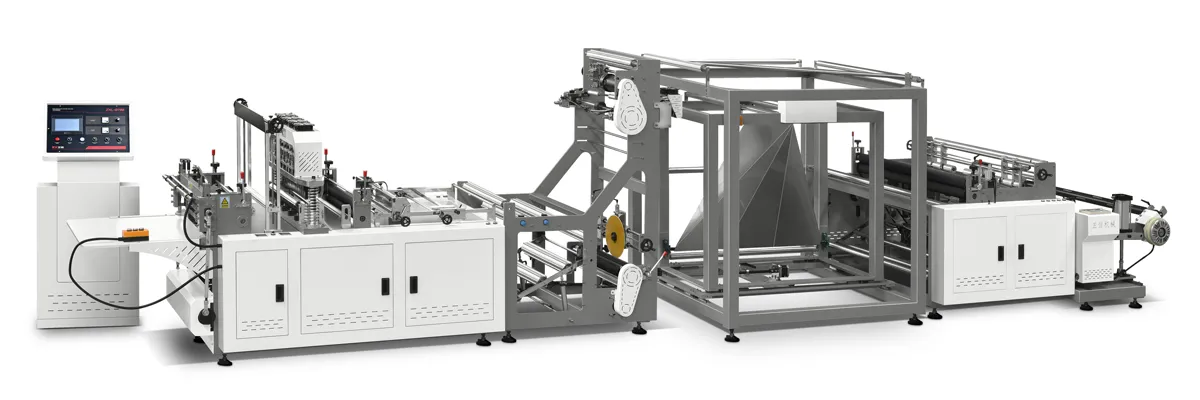
ZXL-A700背心袋无纺布制袋机.webp)
 English
  العربية
  Español
  Русский
  O‘zbekcha
  Қазақ тілі
  Português (AO90)
  Tiếng Việt
  (فارسی (افغانستان
  Kiswahili
  አማርኛ
አማርኛ  தமிழ்
தமிழ்  Bahasa Indonesia
  اردو
اردو  हिन्दी
  বাংলা
বাংলা