
What If a Machine Passes FAT but Cannot Produce Accepted Bags at Your Factory?
Factory acceptance proves performance under the Supplier’s utilities, materials, operators, and environment. It does not prove that the destination floor is level, the power and air are stable, the machine was reassembled correctly, or local materials behave the same way. If the site team starts production before checking transport damage, protective bonding, guards, alignment, recipes, and training, every fault becomes difficult to assign. The buyer may blame the machine while the Manufacturer points to installation conditions. A structured Site Acceptance Test closes this gap. It compares the delivered serial number with the contract, verifies safe installation, confirms utilities under load, repeats agreed product trials, records deviations, and defines when commissioning becomes accepted production.
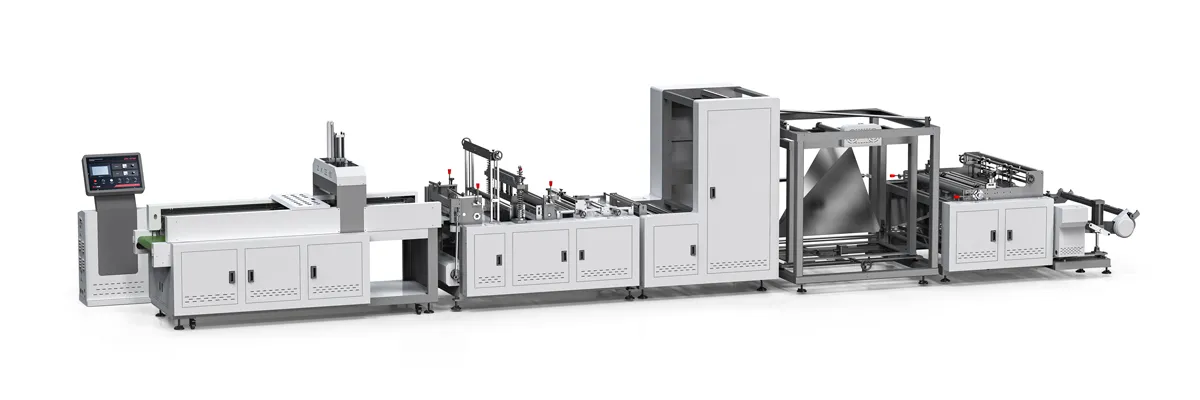
A valid SAT verifies delivery completeness, installation, safety functions, plant utilities, controls, product quality, output, training, documents, and open-item closure under the agreed site conditions. Zhengxin converts these checks into a model-specific commissioning protocol for each OEM line.
The following checklist helps importers, project owners, wholesalers, and distributors separate transport, installation, process, and training issues. It also defines objective release evidence for a standard or Customizable ODM system without simply repeating the factory test.
Freeze SAT Scope, Preconditions, and Responsibility
Approve the protocol before the machine arrives. Reference the purchase order, user requirement specification, final layout, FAT report, punch list, change orders, manuals, and agreed bag drawings. State who supplies operators, fabric, ink, power, compressed air, lifting equipment, test instruments, and translators.
| Gate | Minimum precondition | Evidence |
|---|---|---|
| Installation ready | Foundation, access, utilities, lighting, ventilation | Signed site-readiness checklist |
| Mechanical complete | Frames, guards, rollers, tooling, fasteners installed | Installation inspection record |
| Electrical complete | Supply, protection, bonding, cabinet checks | Qualified electrical test record |
| Dry commissioning | Safe motion and I/O checks authorized | Functional test sheets |
| Product trial | Approved material, recipe, gauges, operators | Trial plan and material identity |
Define hold points. Nobody should energize or run material until the designated responsible people release the preceding gate.
Inspect Delivery Condition and Reassembly Traceability
Before unpacking, photograph the container seal, package condition, moisture indicators where specified, and any impact or water evidence. Reconcile every case against the packing list. Record shortages and damage before disposal of packaging.
- Match machine nameplates, serial numbers, modules, tooling, and accessories to the contract.
- Confirm shipping locks and temporary supports are removed according to instructions.
- Use match marks and photos to reconnect cables, hoses, guards, and split frames.
- Check machine level, frame joints, roller parallelism, belt tracking, fasteners, lubrication, and free motion.
- Restore backed-up PLC, HMI, drive, and recipe versions only through controlled procedures.
Keep a damage and shortage register with owner, due date, commercial status, and effect on the SAT sequence.
Verify Safety Before Production Motion
ISO 12100 provides principles for machinery risk assessment and risk reduction. IEC 60204-1 covers electrical equipment of machines from the defined supply connection. Site installation, connected auxiliaries, and modifications can change the risk assessed at the factory.
- Inspect guards, doors, interlocks, emergency stops, warnings, and safe access.
- Verify protective bonding and electrical tests through qualified personnel.
- Test stop functions and reset behavior from every relevant operating mode.
- Confirm unexpected restart is prevented after power or air restoration as designed.
- Check stored pneumatic, mechanical, thermal, and electrical energy controls.
- Record each safety test, expected result, actual result, and witness.
Do not bypass an interlock to keep commissioning on schedule. Any site modification requires documented engineering review and, where applicable, reassessment of conformity responsibilities.
Measure Utilities at the Machine Under Load
Confirm voltage, phase, frequency, protective devices, earthing system, and connection against the serial-number documents. Measure values during idle, normal production, maximum agreed test, and restart. For compressed air, measure pressure at the point of use during the highest simultaneous pneumatic demand.
| Utility check | Test condition | Acceptance basis |
|---|---|---|
| Supply voltage and phase | Idle and peak operating state | Machine document and local design |
| Current and protection | Normal and maximum agreed product | Approved electrical schedule |
| Air pressure | Highest simultaneous actuator event | Supplier point-of-use requirement |
| Air quality | Defined sampling point | Contracted particle, water, and oil class |
| Ambient conditions | During representative run | Agreed temperature, humidity, dust, and ventilation range |
Record calibrated instrument identity. A panel display or upstream compressor gauge is not enough when dynamic voltage drop or pressure loss is under investigation.
Commission Functions from Dry Cycle to Real Material
Use a staged sequence. First verify manual jog and individual I/O. Then run a dry automatic cycle where safe. Introduce approved fabric at reduced speed, establish web path and tension, teach sensors, set ultrasonic parameters, and confirm cutting, folding, gusseting, punching, handle attachment, counting, and stacking.
- Use the delivered machine recipe as a controlled starting point, not an unexplained universal setting.
- Record fabric Supplier, lot, GSM, width, treatment, print repeat, and unwind direction.
- Track every alarm and adjustment with time, cause, action, and result.
- Verify stops do not create unsafe motion or uncontrolled restart.
- Save the accepted recipe after the process stabilizes.
For Customizable modules, test every contracted operating path. A successful D-cut run does not validate an online-handle or drawstring configuration.
Repeat Product and Performance Acceptance at Site
Test the agreed minimum, normal, and maximum product cases with representative material. Define the run duration, sampling interval, good-count position, allowable stops, scrap calculation, and quality methods before starting.
| Result | What to record | Common false pass |
|---|---|---|
| Dimensions | Bag width, height, gusset, handle, cut registration | Measuring only one startup bag |
| Seam quality | Appearance, strength method, failure mode | Accepting appearance without agreed test |
| Output | Good bags per minute over stated interval | Using peak display speed |
| Waste | Setup, process reject, trim, and stoppage waste | Excluding startup material without agreement |
| Reliability | Stops, alarms, causes, recovery time | Resetting alarms without recording them |
If local material differs from FAT material, record the change and decide whether the issue belongs to material qualification, machine adjustment, or contract performance.
Close Training, Documentation, and the SAT Punch List
Training should require demonstrated tasks, not attendance alone. Operators should load material, change a recipe, respond to a normal alarm, inspect quality, and stop safely. Maintenance staff should isolate energy, perform inspections, restore backups, identify spare parts, and execute approved adjustments.
The final dossier should contain signed test sheets, utility readings, product samples, accepted recipes, software backups, training records, manuals, drawings, spare-parts verification, and the SAT punch list. Classify open items by safety, production, quality, documentation, and cosmetic impact. Define owner, due date, retest, payment retention, and written closure.
Send Zhengxin your machine model, site utilities, bag drawings, materials, and acceptance targets. We can prepare a Customizable SAT and commissioning plan that turns installation into documented, repeatable production.
ZXL-A700背心袋无纺布制袋机.webp)
 English
  العربية
  Español
  Русский
  O‘zbekcha
  Қазақ тілі
  Português (AO90)
  Tiếng Việt
  (فارسی (افغانستان
  Kiswahili
  አማርኛ
አማርኛ  தமிழ்
தமிழ்  Bahasa Indonesia
  اردو
اردو  हिन्दी
  বাংলা
বাংলা