
Poor supplier selection often leads to unstable machines, production delays, and wasted investment. Choosing a reliable bag-making machine manufacturer solves these risks and ensures long-term productivity.
Leading bag-making machine manufacturers can be identified by evaluating their industry experience, production technology, machine stability, customization ability, certifications, and global service support. Reliable suppliers typically provide automated equipment, diverse bag-making capabilities, and proven export experience in plastic-ban markets. Careful comparison of these factors helps businesses select machines that ensure efficient, stable, and scalable bag production.
Understanding what separates an average supplier from an industry leader helps buyers make confident, long-term investment decisions.
Understand the Manufacturer’s Industry Experience
Experience is one of the most reliable indicators of a manufacturer’s capability. Companies with many years in the bag-making equipment industry usually have refined engineering processes, stronger research and development teams, and mature production systems.
For example, manufacturers specializing in non-woven bag production equipment often have dedicated teams responsible for machine design, development, installation, and service. These companies tend to continuously improve machine intelligence, automation, and production efficiency. According to company documentation, manufacturers with over a decade of experience can offer complete equipment solutions and have established partnerships across dozens of countries.
Buyers should investigate:
Years of manufacturing experience
Number of installed machines globally
R&D capabilities and technical teams
Case studies or long-term customer partnerships
A manufacturer with a solid track record reduces the risks associated with equipment reliability and after-sales support.
Evaluate Machine Technology and Automation
Leading manufacturers invest heavily in technology to improve productivity and operational efficiency. Advanced machines integrate automation, intelligent controls, and precision systems.
Modern non-woven bag-making machines often feature:
Touch Screen Intelligent Control
Machines equipped with color touch screens allow operators to monitor and adjust parameters easily. Clean interfaces simplify operation and reduce training requirements.
Ultrasonic Welding Technology
Ultrasonic welding replaces traditional sewing methods, allowing faster production speeds and stronger bag seams. This technology also reduces labor requirements and improves consistency.
High-Efficiency Automated Production
Automation enables machines to perform multiple processes simultaneously—feeding, sealing, cutting, and shaping. This greatly increases production output while lowering labor costs.
Manufacturers who continually upgrade their equipment with intelligent automation usually provide machines capable of meeting modern industrial demands.
Check the Types of Bags the Machine Can Produce
Versatility is another important indicator of a strong manufacturer. Leading suppliers offer machines capable of producing multiple bag styles rather than only a single type.
Advanced bag-making machines can produce:
Shopping bags
T-shirt bags
Box bags
Gift bags
Food and beverage packaging bags
Clothing or shoe bags
Insulated takeaway bags
Machines with multi-function capabilities allow manufacturers to respond quickly to changing market demands. According to equipment specifications, one machine may support a wide range of raw materials such as laminated fabrics, PP materials, transparent film, and woven materials.
This flexibility is particularly valuable for companies expanding into eco-friendly packaging markets.
Review Environmental and Energy-Saving Features
With global plastic bans increasing demand for sustainable packaging, environmentally friendly machine technology is becoming essential.
Leading manufacturers design equipment specifically for eco-friendly bag production. These machines support materials such as non-woven fabrics and RPET, helping businesses comply with environmental regulations.
Energy-efficient equipment also reduces operating costs and improves sustainability credentials. Buyers should look for manufacturers that prioritize green manufacturing technology and energy-saving design.
Assess Machine Stability and Reliability
Machine stability directly affects production efficiency and profitability. Frequent breakdowns can cause costly downtime and delayed deliveries.
Reliable manufacturers conduct strict quality control throughout the production process. Stable machines typically feature:
Precision mechanical components
Durable ultrasonic welding systems
Stable feeding and tension control
Continuous high-speed operation capability
Companies that focus on stability ensure consistent output and long machine service life.
Examine Customization and Scalability
Not all manufacturers require the same machine configuration. Leading suppliers provide flexible customization options that match different production requirements.
Customization may include:
Bag size adjustments
Different handle attachment systems
Printing machine integration
Material compatibility options
Scalable equipment allows businesses to upgrade production capacity as demand grows. This is especially important for manufacturers entering new eco-bag markets.
Evaluate Global Service and Technical Support
After-sales service is often overlooked but extremely important when purchasing industrial equipment.
Top manufacturers provide:
Overseas installation support
Technical training for operators
Remote troubleshooting assistance
Spare parts supply
Long-term maintenance services
Suppliers with global service teams help customers minimize downtime and maintain stable production operations.
Analyze Customer Feedback and Export Markets
One of the best ways to identify leading manufacturers is by examining their export history and customer feedback.
Reliable manufacturers typically export machines to many countries and maintain long-term partnerships with international customers. Machines designed for plastic-restriction regions—such as Africa, Southeast Asia, and South America—often demonstrate proven adaptability to different markets.
Positive reviews, repeat orders, and long-term cooperation agreements all indicate strong product performance and customer satisfaction.
Compare Price with Overall Value
While price is an important factor, choosing the lowest-cost machine can lead to long-term operational problems. Leading manufacturers focus on delivering value through reliability, automation, and efficiency.
Buyers should evaluate:
Machine lifespan
Production efficiency
Maintenance requirements
Energy consumption
Technical support
A slightly higher upfront investment often results in lower operating costs and higher profitability over time.
Conduct Factory Verification Before Purchase
Before making a final decision, buyers should verify the manufacturer directly.
Recommended steps include:
Visiting the factory or arranging a video inspection
Watching live machine operation demonstrations
Reviewing certifications and patents
Evaluating production facilities
Direct verification provides valuable insight into the manufacturer’s production capacity and quality standards.
Conclusion
Finding a leading bag-making machine manufacturer requires evaluating experience, technology, machine stability, customization capability, and global service support.
Choosing the right manufacturer ensures reliable equipment, efficient production, and long-term business growth.
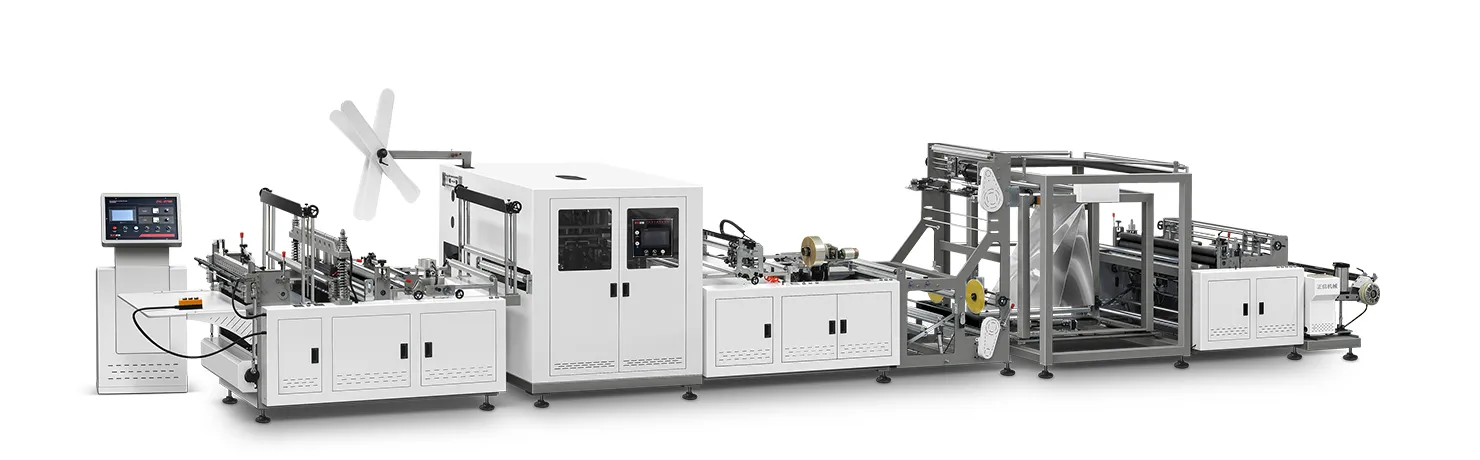
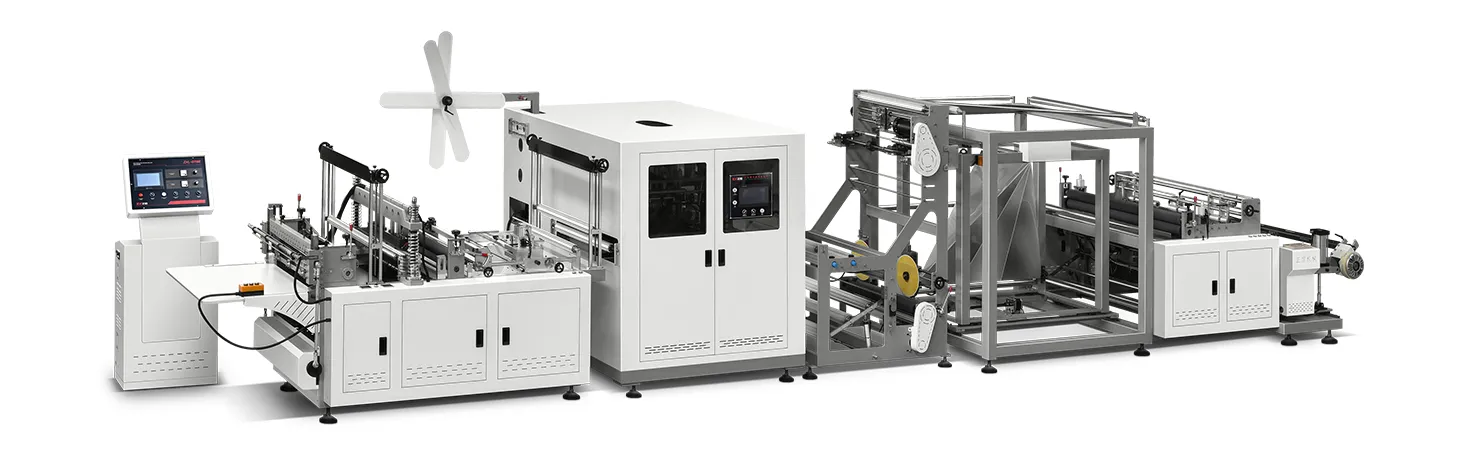
ZXL-E700 Non-Woven Box Bag Making Machine With Oline Handle Attaching(5-in-1)
- Ultrasonic welding technology: Revolutionizing traditional processes.
- Efficient automated production: A powerful tool for reducing costs and increasing efficiency.
- Versatility and adaptability: Meeting diverse needs.
 English
  العربية
  Español
  Русский
  O‘zbekcha
  Қазақ тілі
  Português (AO90)
  Tiếng Việt
  (فارسی (افغانستان
  Kiswahili
  አማርኛ
አማርኛ  தமிழ்
தமிழ்  Bahasa Indonesia
  اردو
اردو  हिन्दी
  বাংলা
বাংলা