
AQL sampling does not mean that the buyer accepts an AQL percentage of defective bags. It is an indexed statistical system for selecting a sample and applying acceptance or rejection numbers to a defined lot. The lot, inspection level, AQL, plan type, defect classes, and governing edition must be agreed before inspection.
Why Writing AQL 2.5 on a Purchase Order Is Not Enough
An inspector cannot choose a valid sample from one number. Is the shipment one lot or several production lots? Is normal, tightened, or reduced inspection active? Which general or special inspection level applies? Is the plan single, double, or multiple? Are handle detachment and a light print scratch both counted the same way? What happens if the result fails?
ISO 2859-1:2026 is the current published edition for AQL-indexed lot-by-lot inspection by attributes. It replaced the 1999 edition and its amendments. Use the licensed standard or a qualified inspection provider to select the actual code letter, sample size, and acceptance or rejection numbers. Do not copy a table from an old blog.
Form a Lot That Represents One Production Population
A lot should have a clear identity and be reasonably uniform for the purpose of sampling. Record purchase order, product and artwork revision, factory, line, shift or date range, material lots, color, bag size, pack method, and total quantity.
If two colors use different inks or two lines use different tooling, combining them can hide a concentrated defect. Define whether each combination is a separate inspection lot. Keep cartons numbered so samples can be drawn across the beginning, middle, and end rather than from the easiest pallets near the door.
Choose the Sampling Plan Through a Written Contract
| Input | Decision owner | Why it matters |
|---|---|---|
| Standard and edition | Buyer and Supplier | Tables and rules can change by edition |
| Lot size | Factory provides; inspector verifies | Drives sample-size selection |
| Inspection level | Buyer based on risk and contract | Changes the code letter and sample |
| AQL by defect class | Buyer and Supplier agreement | Sets the indexed acceptance plan |
| Plan and severity | Contract or switching rules | Defines normal, tightened, reduced, single, or other plan |
| Disposition after failure | Commercial agreement | Prevents improvised shipment release |
The machine Manufacturer does not choose the buyer’s AQL automatically. Product risk, customer promise, inspection cost, and process history belong in that decision.
Write a Defect Catalogue for the Actual Bag
Classify defects by their effect on safety, regulatory compliance, function, saleability, and appearance. Names alone are not enough. Include photographs, location, measurement method, severity, and borderline examples.
| Potential defect | Question that determines severity | Objective evidence |
|---|---|---|
| Open ultrasonic seam | Can the bag lose contents or fail the agreed load? | Location, opening length, seam test |
| Handle misplacement | Does it affect carrying, balance, or approved appearance? | Drawing datum and measured offset |
| Incorrect bag dimensions | Does the measurement exceed the released tolerance? | Conditioned measurement by defined method |
| Print defect | Is identity, barcode, legal text, or approved artwork affected? | Approved artwork and golden sample |
| Contamination | Is it removable, hazardous, or unacceptable for the intended use? | Type, size, location, and product requirement |
These are classification questions, not universal severity assignments. The buyer and Supplier must agree on the specific catalogue.
Draw the Sample Randomly Across the Shipment
Sampling from one open carton is convenient but weak. Use a documented random or systematic selection method across pallets, cartons, layers, colors, and production periods. Record every selected carton and unit so a failure can be investigated.
- Confirm the lot is complete enough for the agreed inspection.
- Verify carton and unit quantity independently.
- Prevent factory staff from replacing selected units.
- Inspect under defined lighting and measurement conditions.
- Count defective units according to the governing plan; do not silently count every defect as another unit.
Separate General Workmanship from Special Functional Tests
Some checks are destructive, slow, or require equipment: handle strength, seam strength, material GSM, print adhesion, rub resistance, color measurement, load hold, cyclic use, or packaging transit tests. They may use a special inspection level, a separate sample, or another standard.
State the sample quantity, conditioning, apparatus, method, acceptance value, and whether tested units return to the AQL sample. Do not claim that a visual AQL pass proves every performance property.
Report the Result So It Can Be Reopened
The report should identify the standard and edition, lot, sample plan inputs, code letter, sample size, acceptance and rejection numbers, selected cartons, each defect, severity, photos, measurements, functional-test results, quantity and packaging checks, and final disposition.
If the lot fails, the normal commercial options are hold, sort or rework, replace, concession, or reject, subject to contract. A second inspection should occur only after the corrective action and new lot status are documented. Repeated sampling until a pass is not a corrective action.
Connect Inspection Back to the Bag-Making Process
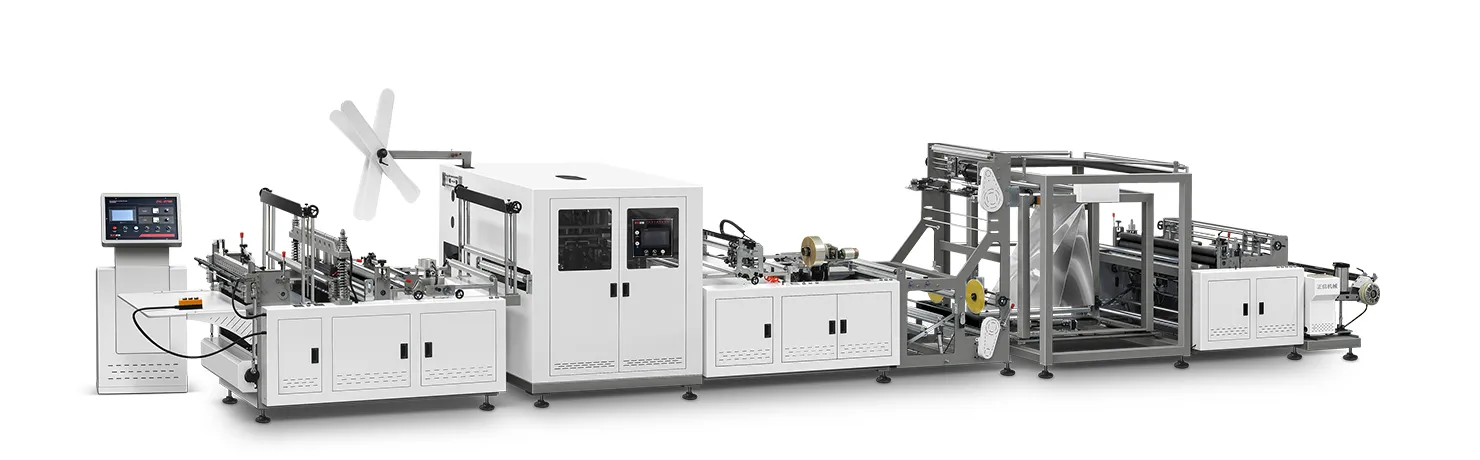
Send Zhengxin the defect map, bag drawing, material lot, machine serial number, recipe, production period, and failed samples. We can help separate tooling, ultrasonic, tension, tracking, cutting, handle, and setup causes on the Customizable OEM or ODM line. The AQL decision remains the buyer’s contractual acceptance process, not a substitute for process control.
ZXL-A700背心袋无纺布制袋机.webp)
 English
  العربية
  Español
  Русский
  O‘zbekcha
  Қазақ тілі
  Português (AO90)
  Tiếng Việt
  (فارسی (افغانستان
  Kiswahili
  አማርኛ
አማርኛ  தமிழ்
தமிழ்  Bahasa Indonesia
  اردو
اردو  हिन्दी
  বাংলা
বাংলা