
Plastic bag alternatives often fail on cost, consistency, or speed; poor production planning causes waste and weak bags. Modern automated non-woven bag-making lines solve this.
Non-woven bags are made by feeding non-woven fabric into an automated machine that cuts, folds, welds, prints, and forms handles into finished bags. The process is fast, consistent, and adaptable to shopping bags, box bags, takeaway bags, and promotional bags. Advanced equipment improves efficiency, bag strength, and production stability.
The full process reveals why machine design, fabric choice, and automation matter for bag quality and factory profitability.
1. What Are Non-Woven Bags?
Non-woven bags are made from polypropylene or similar fiber-based materials that are bonded into fabric without traditional weaving. This fabric is lightweight, durable, printable, and suitable for repeated use. Because of these advantages, it is widely used for eco-friendly shopping bags, gift bags, takeaway bags, and promotional packaging.
In industrial production, manufacturers usually begin with large rolls of non-woven fabric, then process the material through a bag-making line that converts raw fabric into finished bags at high speed. Modern equipment increasingly focuses on intelligent control, automated operation, and precise forming, helping factories improve consistency and reduce manual dependence.
2. Step One: Material Preparation
The production process starts with material preparation. Rolls of non-woven fabric are selected according to:
thickness
width
color
lamination requirements
final bag application
Some orders use standard non-woven fabric, while others require laminated fabric, composite structures, or stronger materials for better stiffness and appearance. After selection, the material roll is mounted onto the machine and adjusted through a stable feeding and tension-control system.
This stage is important because even small feeding errors can affect:
bag size
sealing quality
appearance
production speed
A stable feeding system creates the foundation for efficient, high-quality bag production.
3. Step Two: Cutting and Folding
Once the fabric enters the machine, it moves into the cutting and folding stage. At this point, the equipment measures the required bag dimensions and automatically performs cutting, folding, and shaping operations.
Modern non-woven bag-making machines can be programmed for different specifications, such as:
bag width
bag height
gusset depth
handle position
This makes it possible for one machine to produce multiple bag types, including shopping bags, gift bags, takeaway bags, clothing bags, and daily-use packaging bags. For manufacturers, this flexibility is highly valuable because it allows fast product switching and better response to changing customer demand.
4. Step Three: Sealing and Bonding
After cutting and folding, the bag enters the bonding stage. In many modern production lines, this is done through ultrasonic welding rather than traditional stitching.
Ultrasonic welding works by generating high-frequency vibration that creates heat at the contact point, bonding the non-woven material layers together. This method offers several advantages:
clean and neat sealing
fast processing speed
reduced thread-related issues
better consistency in mass production
Because of these benefits, ultrasonic welding has become a key technology in non-woven bag manufacturing. It helps factories achieve higher efficiency while also improving the appearance and durability of the finished bag.
5. Step Four: Printing
For branded or customized bags, printing is another essential step. Logos, product information, promotional messages, and decorative patterns can be added using a non-woven printing machine or an integrated printing system.
Printing may happen:
before bag conversion
during production
as a separate post-processing step
Clear printing is important because the bag often serves not only as packaging, but also as a marketing tool. A well-printed non-woven bag improves brand visibility and adds value for retail, wholesale, and promotional use.
6. Step Five: Handle Forming and Bag Structure
The next stage is handle forming and structural completion. Depending on the bag style, the machine creates different features such as:
loop handles
cut-out handles
box bag bottoms
side gussets
Simple shopping bags usually focus on speed and convenience, while box bags require a stronger and more structured design for higher load capacity. Some machines are built for specific bag types, while others can support multiple styles through tooling changes or parameter adjustments.
This flexibility helps manufacturers expand their product range without investing in completely separate systems for every bag design.
7. Step Six: Automation and Control
Automation plays a major role in modern bag production. Advanced machines often include:
touch-screen control panels
automatic counting
length tracking
sealing adjustment
fault monitoring
These features make the machine easier to operate and reduce errors during production. A clear control system allows operators to set parameters quickly and monitor machine performance in real time.
For manufacturers, strong automation means:
lower labor dependence
less material waste
more stable output
easier order management
This directly affects factory productivity and profitability.
8. Step Seven: Inspection and Finished Output
The final stage is quality inspection. Even with highly automated equipment, finished bags still need to be checked for:
dimensional accuracy
seal strength
print clarity
handle quality
overall appearance
This ensures the finished products meet market requirements and customer expectations. Consistent quality is especially important in markets where reusable bags are replacing plastic bags and where buyers demand stable, repeatable production standards.
9. Why the Manufacturing Process Matters
Understanding how non-woven bags are made is important because the production process directly affects:
bag durability
appearance
output efficiency
machine operating cost
long-term business competitiveness
A machine with stable feeding, accurate cutting, reliable welding, and efficient control can help a factory reduce waste, improve output, and serve more customers with different bag requirements.
10. Final Thoughts
In summary, non-woven bags are made through material feeding, cutting, folding, ultrasonic welding, printing, handle forming, and inspection. Efficient automation ensures quality and stable output.
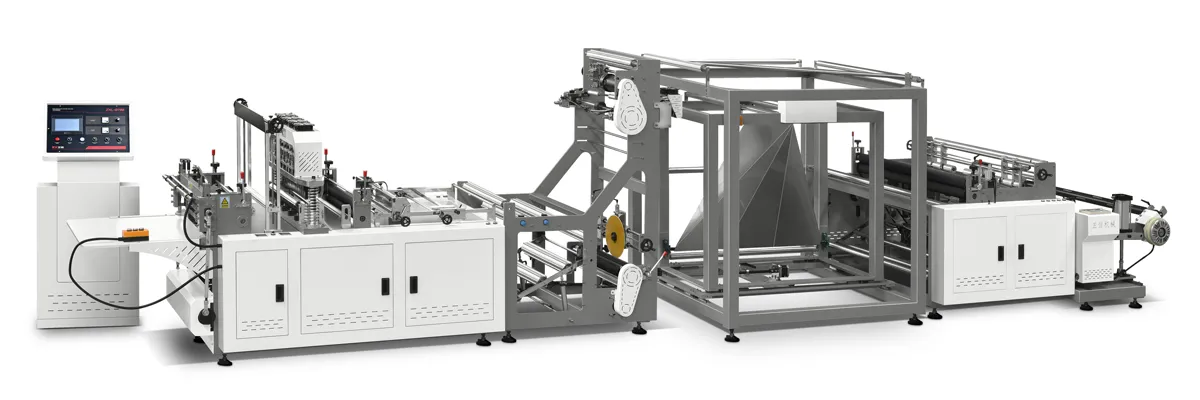
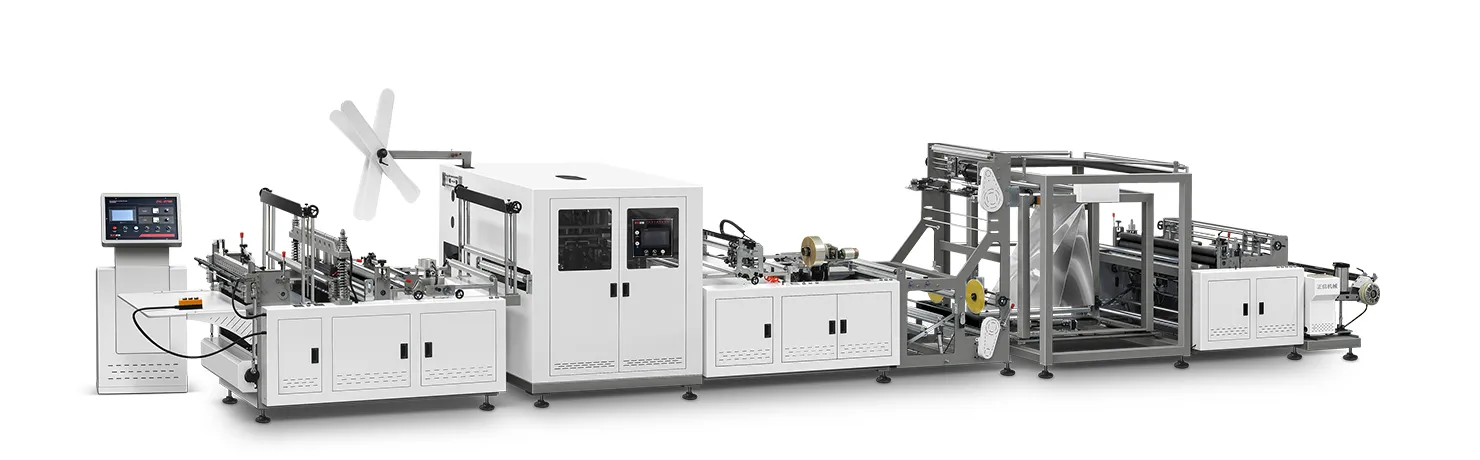
ZXL-B700 Non-Woven D-cut Bag Making Machine
- Ultrasonic Sealing Technology
- Efficient Automatic Production
- Low production cost
 English
  العربية
  Español
  Русский
  O‘zbekcha
  Қазақ тілі
  Português (AO90)
  Tiếng Việt
  (فارسی (افغانستان
  Kiswahili
  አማርኛ
አማርኛ  தமிழ்
தமிழ்  Bahasa Indonesia
  اردو
اردو  हिन्दी
  বাংলা
বাংলা