
If you’re still sourcing woven bags in a plastic-restricted market, you’re missing efficiency, eco compliance, and profit—nonwoven is the smarter solution.
Woven bags are made by weaving threads together, offering durability and strength. Nonwoven bags, on the other hand, are bonded with heat or chemicals, making them more eco-friendly, cost-effective, and suitable for high-speed automated production.
Discover how switching from woven to nonwoven can transform your packaging strategy.
Nonwoven bags provide faster production, lower costs, and comply with global plastic ban policies.
Main Body
The difference between woven and nonwoven bags lies in their manufacturing process, material structure, application suitability, and environmental impact.
Woven Bags
Woven bags are produced by weaving polypropylene threads together, creating a structured and highly durable fabric. This interlacing pattern gives the bags excellent tensile strength, allowing them to carry heavy loads over longer periods. Common applications include rice bags, cement sacks, and heavy-duty shopping carriers. However, their production is more time-consuming, and the final product typically requires lamination for water resistance and printing clarity, adding to both material and process costs.
Nonwoven Bags
Nonwoven bags, by contrast, are manufactured by bonding long fibers through mechanical, heat, or chemical processes rather than weaving. The most commonly used material is spunbond nonwoven polypropylene (PP). This allows for faster, automated production with less labor and energy consumption. Nonwoven bags are lightweight, printable without lamination, and suitable for making shopping bags, T-shirt bags, promotional totes, and gift bags. Importantly, they meet eco-friendly standards in many countries with plastic bans, making them the preferred choice for businesses seeking sustainable solutions.
From a production standpoint, nonwoven bags offer several advantages:
Ultrasonic welding technology ensures firm sealing and attractive finishes without traditional stitching.
High-speed, automated production cuts labor costs and boosts efficiency.
Multifunctional capabilities allow one machine to create various bag types—from daily essentials to insulated food bags.
Material versatility supports not only PP nonwoven fabrics but also laminated films and recycled materials like RPET.
For buyers and manufacturers in regions such as Africa, Southeast Asia, and South America—where plastic bans and cost-efficiency are top concerns—nonwoven bags and machines offer long-term strategic benefits.
Woven vs Nonwoven: Side-by-Side Comparison
| Feature | Woven Bags | Nonwoven Bags |
|---|---|---|
| Production | Weaving threads | Heat or chemically bonded fibers |
| Strength | High tensile strength | Sufficient for most uses |
| Cost | Higher due to lamination | Lower, efficient production |
| Eco Compliance | Requires additional treatments | Eco-friendly and recyclable |
| Printability | Needs lamination | Direct printing possible |
| Applications | Heavy-duty packaging | Retail, gift, T-shirt bags |
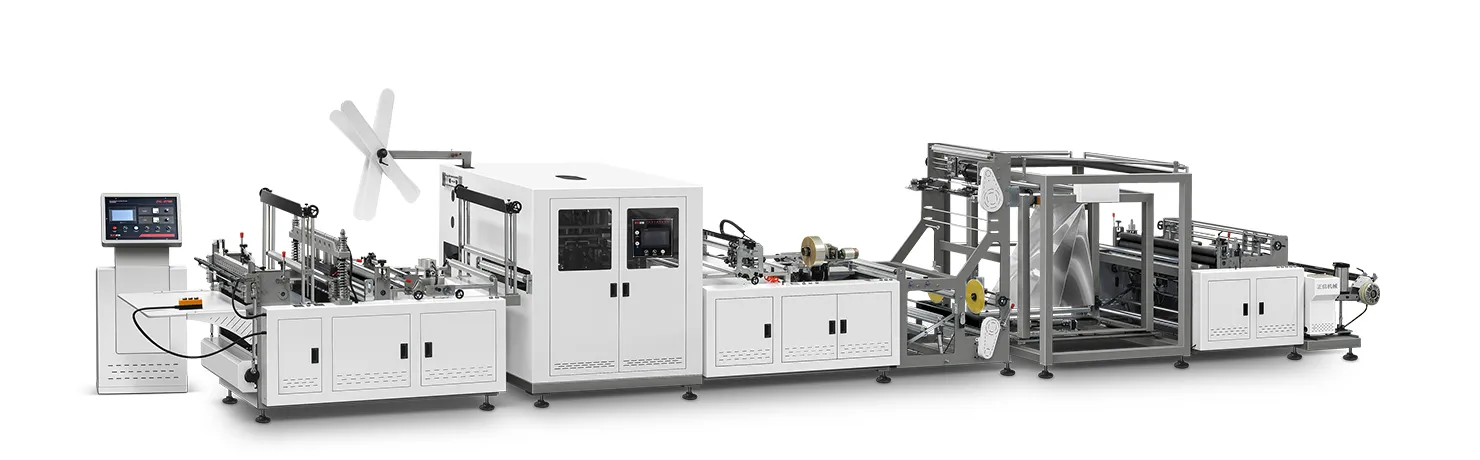
Zhejiang Zhengxin Machinery Co., Ltd. provides a full range of nonwoven bag making machines designed for speed, versatility, and eco-compliance. Their machines support fully automatic processes and serve over 40 countries worldwide. Whether for manufacturers shifting from plastic or woven solutions, or for entrepreneurs targeting the eco-bag market, Zhengxin offers scalable solutions backed by overseas after-sales support.
ZXL-A700背心袋无纺布制袋机.webp)
 አማርኛ
አማርኛ  English
  العربية
  Español
  Русский
  O‘zbekcha
  Қазақ тілі
  Português (AO90)
  Tiếng Việt
  (فارسی (افغانستان
  Kiswahili
  தமிழ்
தமிழ்  Bahasa Indonesia
  اردو
اردو  हिन्दी
  বাংলা
বাংলা