
A non-woven bag passes a handle-strength validation only when the agreed bag construction, load direction, specimen condition, test method, rate or cycle, failure criterion, and sampling plan are documented. A strong base fabric does not prove that a D-cut edge or loop-handle weld will carry the intended load.
The Failure Location Matters More Than One Maximum Number
Imagine two bags reaching the same peak force. One tears gradually in the fabric away from the weld. The other peels suddenly along a narrow ultrasonic line. Reporting only the maximum force hides a different design risk. The validation record should identify where failure starts, how it propagates, and whether the bag remains usable after the specified test.
Separate four elements: base nonwoven strength, cut-edge geometry, welded joint, and complete bag construction. Each answers a different question.
Define the Intended Use Before Choosing the Test
The buyer should state the product mass, load shape, carrying duration, number of reuse cycles if relevant, temperature and moisture exposure, safety margin policy, and foreseeable handling. A flat promotional item and a rigid grocery load apply force differently even when their mass is equal.
| Input | Why it changes the test | Evidence to retain |
|---|---|---|
| Bag style and dimensions | Changes load path and stress concentration | Released drawing and sample code |
| Fabric construction | Changes tear and elongation behavior | Supplier lot, GSM, MD/CD identity |
| Handle geometry | Changes bearing width and peel direction | Cut or loop dimensions and placement |
| Seam pattern | Changes effective bonded area | Tooling ID and weld drawing |
| Use condition | Changes static, cyclic, or impact demand | Buyer requirement and test rationale |
Use Material Tests Without Pretending They Are Bag Tests
ISO 9073-3:2023 specifies strip methods for nonwoven breaking force and elongation, including 25 mm and 50 mm specimen options. It is useful for comparing incoming material in the machine and cross directions. It does not automatically define how to grip a finished handle or what force a shopping bag must survive.
Use material data to understand the substrate and investigate failures. Create a separate, agreed joint or finished-bag method for the commercial requirement. If a laboratory standard is required by a market or customer, a qualified laboratory should confirm its applicability to the exact construction.
Prepare Samples That Represent Production
Do not validate hand-selected perfect bags made during setup. Define the production lot, machine, shift, roll numbers, recipe, tooling, operator, and sample positions. Include startup, stable production, and later roll diameter if these states may differ.
- Condition and store specimens under the agreed method.
- Measure actual fabric mass per area and critical handle dimensions.
- Mark machine direction and cross direction where relevant.
- Record ultrasonic generator, horn, anvil, pressure, speed, and layer stack.
- Photograph the specimen before and after testing with its identity visible.
If the bag is printed, laminated, folded, or locally reinforced, test the production construction rather than a plain laboratory substitute.
Match the Fixture to the Real Load Path
A narrow metal hook can create a cut that a human hand would not. A wide clamp can support fabric that is unsupported in service. The fixture should apply the intended load without introducing an unrelated failure.
| Test form | Question answered | Important control |
|---|---|---|
| Joint strip pull | How does a defined weld specimen fail? | Specimen width, grip, direction, and loading rate |
| Whole-bag static hold | Can the complete bag sustain a stated load and time? | Load distribution, duration, and pass criterion |
| Cyclic lift | Does repeated use initiate damage? | Cycle path, rate, count, and inspection interval |
| Controlled impact or drop | How does dynamic handling affect the construction? | Fill material, height, orientation, and safety enclosure |
These methods are not interchangeable. If several are needed, report each result separately.
Read D-Cut and Loop-Handle Failures Differently
D-cut bags
Inspect the cut radius, edge smoothness, distance from cut to bag edge, local fabric orientation, reinforcement layer, and any heat or mechanical damage from punching. Sharp corners and rough notches concentrate stress. Map the first tear location around the complete opening rather than recording handle failed.
Loop-handle bags
Inspect loop material, width, overlap, placement, left-right symmetry, weld pattern, bonded area, and peel direction. A loop may remain intact while the attachment peels from the bag body. Test both handle ends and both sides. Record whether failure occurs in the loop, attachment weld, surrounding bag fabric, or adjacent bag seam.
Translate Test Results into a Production Control Plan
Set a written acceptance value only after the buyer’s use requirement, test method, risk policy, and process capability are known. A Manufacturer should not invent one universal kilogram claim for every bag.
- Approve the construction and method through a documented validation run.
- Identify process variables that affect the result.
- Define first-piece and in-process checks that operators can perform.
- Schedule destructive verification at a risk-based frequency.
- Define stop, segregation, investigation, and retest rules.
Trend force and failure mode together. A stable average can hide a shift from fabric break to weld peel.
What Zhengxin Needs to Review the Application
Send the bag drawing, target use, fabric specification, handle construction, sample photos, proposed test method, acceptance rule, failure map, and machine configuration. Zhengxin can help align a Customizable OEM or ODM tooling and recipe trial with the buyer’s documented validation plan. Final product safety and market compliance remain subject to the buyer’s requirements and qualified review.
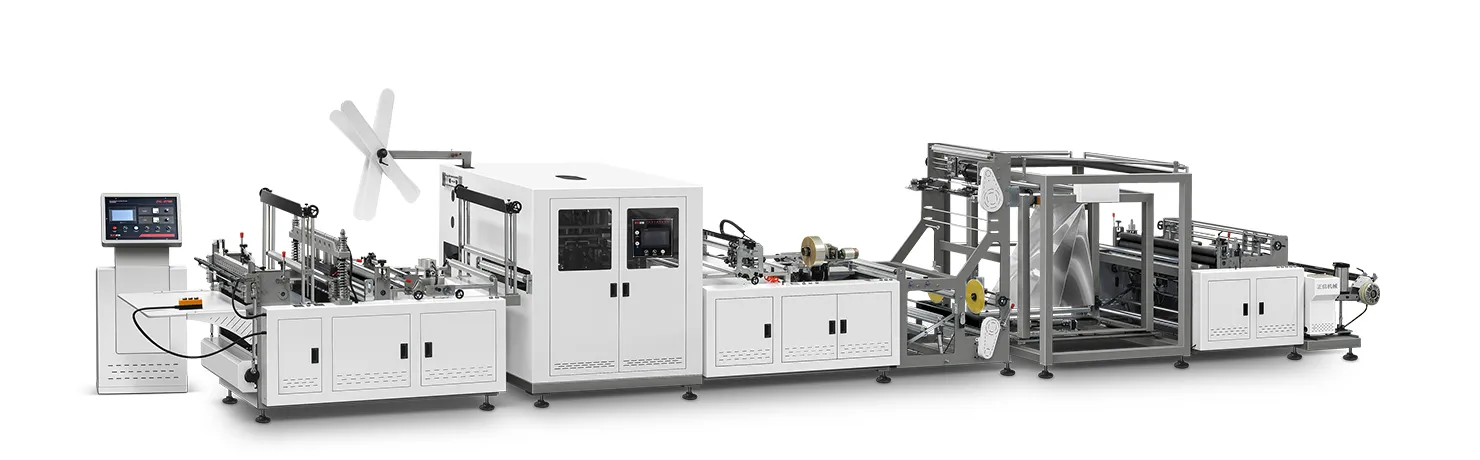
ZXL-A700背心袋无纺布制袋机.webp)
 አማርኛ
አማርኛ  English
  العربية
  Español
  Русский
  O‘zbekcha
  Қазақ тілі
  Português (AO90)
  Tiếng Việt
  (فارسی (افغانستان
  Kiswahili
  தமிழ்
தமிழ்  Bahasa Indonesia
  اردو
اردو  हिन्दी
  বাংলা
বাংলা