
Businesses often struggle to meet diverse packaging demands with a single machine. Using limited equipment can increase costs and reduce competitiveness. Fortunately, modern non-woven bag making machines support multiple materials, improving flexibility and production efficiency.
Yes, modern non-woven bag making machines are designed to process multiple materials, including non-woven fabrics, laminated fabrics, PP materials, woven fabrics, transparent films, and composite materials. This versatility allows manufacturers to produce various bag styles for different industries while reducing equipment investment and maximizing production flexibility.
Understanding material compatibility is essential for manufacturers seeking higher productivity and broader market opportunities.
Why Is Multi-Material Compatibility Important in Bag Manufacturing?
In today’s packaging industry, customer requirements vary significantly. Some clients need eco-friendly shopping bags, while others require laminated promotional bags, insulated takeaway bags, or durable gift bags.
Purchasing separate machines for each material type can be expensive and inefficient. A machine capable of handling multiple materials enables manufacturers to serve diverse markets without increasing production complexity.
According to Zhejiang Zhengxin Machinery, modern bag-making equipment is developed with intelligence, automation, and precision, helping manufacturers adapt quickly to changing market demands.
The ability to switch between materials provides several advantages:
- Reduced equipment investment
- Greater production flexibility
- Faster response to customer orders
- Expanded product portfolio
- Improved return on investment
For businesses operating in countries with plastic restrictions, this flexibility is particularly valuable because market demand for reusable bags continues to grow.
What Materials Can a Non-Woven Bag Making Machine Process?
Advanced non-woven bag making machines are designed to support a wide range of raw materials.
Common compatible materials include:
| Material Type | Typical Application |
|---|---|
| Non-woven fabric | Shopping bags, promotional bags |
| Laminated non-woven fabric | Premium advertising bags |
| Composite fabrics | Durable reusable bags |
| PP material | Industrial and packaging bags |
| Transparent film | Specialty packaging |
| Woven materials | Heavy-duty carrying bags |
| Laminated fabrics | Luxury retail packaging |
This broad compatibility allows manufacturers to produce different bag categories using a single production line.
For example, one machine can manufacture:
- Food and beverage bags
- Wine bags
- Clothing bags
- Shoe and hat bags
- Gift bags
- Shopping bags
- Takeaway bags
- Insulated bags
Such versatility significantly improves factory utilization rates and helps companies enter new markets more efficiently.
How Does Machine Design Enable Multiple Material Processing?
Modern machines utilize advanced control systems and precision engineering to handle different material characteristics.
One key feature is the touch-screen control interface, which simplifies machine operation and parameter adjustments. Operators can quickly modify settings according to material thickness, density, and bag specifications.
Additionally, ultrasonic welding technology plays a critical role in material adaptability.
Benefits of Ultrasonic Welding Technology
- Strong and consistent sealing quality
- Reduced dependence on traditional sewing processes
- Faster production speed
- Compatibility with various fabric structures
- Lower maintenance requirements
Ultrasonic welding allows manufacturers to maintain high-quality output regardless of material variations, making production more reliable and efficient.
What Are the Business Benefits of Using a Multi-Material Machine?
A multi-material machine offers both operational and financial advantages.
1. Lower Production Costs
Instead of investing in multiple specialized machines, manufacturers can use one versatile system to produce different bag types.
2. Increased Market Opportunities
Supporting multiple materials allows companies to serve industries such as:
- Retail
- Food packaging
- Promotional products
- Fashion accessories
- Hospitality
- E-commerce
3. Improved Production Efficiency
Automated systems reduce manual intervention and improve throughput, enabling higher output with fewer labor requirements.
4. Better Adaptability to Market Trends
Consumer preferences and regulatory requirements continue to evolve. A flexible machine enables manufacturers to respond quickly to new demands without major equipment upgrades.
5. Sustainable Manufacturing
Many businesses are transitioning from plastic bags to reusable alternatives. Multi-material non-woven bag making machines support environmentally friendly production strategies while maintaining profitability.
What Features Should Buyers Look For?
When selecting a non-woven bag making machine with multi-material capabilities, buyers should evaluate several factors.
Important features include:
- Touch-screen intelligent control system
- Ultrasonic welding technology
- Automatic production functions
- Stable operating performance
- Wide material compatibility
- Easy maintenance
- Scalability for future expansion
Reliable machines should also provide consistent production quality and continuous operation capability, ensuring long-term productivity.
Manufacturers that invest in advanced equipment often gain a competitive advantage through lower costs, higher efficiency, and greater product diversity.
Conclusion
Modern non-woven bag making machines support multiple materials, helping manufacturers increase flexibility, reduce costs, and expand market opportunities.
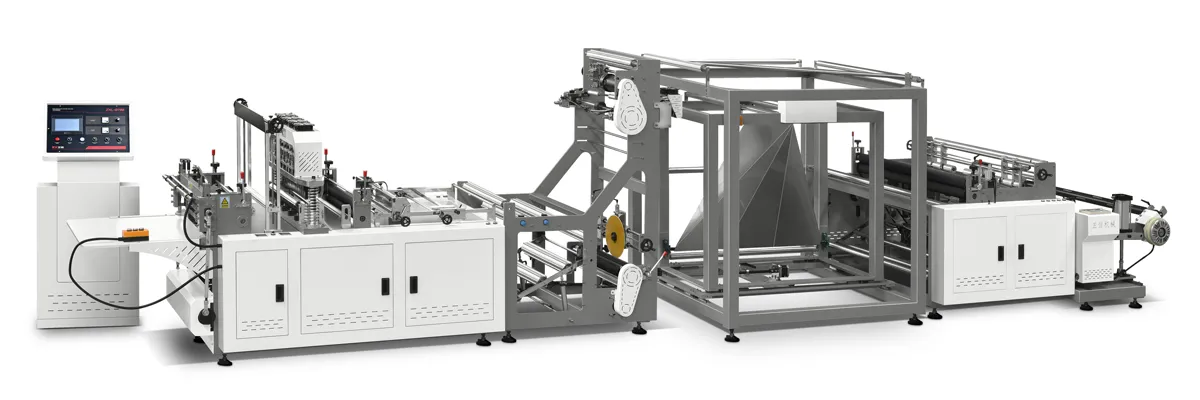
ZXL-A700背心袋无纺布制袋机.webp)
 አማርኛ
አማርኛ  English
  العربية
  Español
  Русский
  O‘zbekcha
  Қазақ тілі
  Português (AO90)
  Tiếng Việt
  (فارسی (افغانستان
  Kiswahili
  தமிழ்
தமிழ்  Bahasa Indonesia
  اردو
اردو  हिन्दी
  বাংলা
বাংলা