
Non-woven bag machine production waste increases cost and causes pollution; improper handling reduces efficiency and profit. Recycling and machine optimization provide an effective solution.
Waste in non-woven bag production mainly includes edge trimming waste, defective products, and leftover materials. If not properly managed, it increases environmental pressure and production costs. Modern ultrasonic welding technology, intelligent automation systems, and recycling processes significantly improve material utilization and support sustainable manufacturing.
Understanding waste sources is only the first step; practical machine-level solutions are more important.
Types of Waste in Non-Woven Bag Production
In non-woven bag manufacturing, waste is generated across multiple stages. The most common type is edge trimming waste created during fabric cutting and shaping. Another major source is defective products caused by poor sealing, inaccurate cutting, or unstable machine operation. In addition, material waste also occurs during roll changes and machine setup.
If not properly controlled, these wastes accumulate quickly and significantly increase production costs. For large-scale factories, even a small waste rate can lead to substantial long-term financial loss.
Causes of Production Waste
One of the main causes is low-precision equipment. Traditional machines often lack automation, leading to inconsistent cutting and sealing quality. Human error during manual operation further increases defect rates.
Another key factor is inefficient production planning. If machine speed does not match feeding systems or settings are not properly calibrated, unnecessary scrap will be produced. Poor maintenance of equipment can also reduce stability and increase waste.
How Advanced Machines Reduce Waste
Modern non-woven bag making machines significantly reduce waste through automation and intelligent control systems. According to the equipment system of
Zhejiang Zhengxin Machinery Co.,Ltd., production lines use touch-screen control and automated operation, reducing human error and improving stability.
Ultrasonic welding technology replaces traditional stitching methods, reducing material deformation and improving sealing accuracy. This results in fewer defective products and higher production efficiency. Multi-functional machine designs also reduce trial production waste by allowing quick product switching.
Recycling and Reuse Strategies
One of the most effective methods to manage waste is recycling edge trims and leftover materials. Many factories reprocess non-woven fabric scraps into secondary raw materials for lower-grade products.
Some manufacturers also adopt closed-loop recycling systems, converting waste into fillers, packaging materials, or auxiliary products. This reduces raw material costs and improves environmental performance.
Role of Automation and Intelligent Control
Automation plays a key role in reducing production waste. Intelligent systems can automatically adjust cutting length, sealing pressure, and operating speed based on real-time conditions, reducing human error.
Predictive maintenance systems can also detect potential machine issues early, preventing breakdowns that may cause batch-level waste and production losses.
Environmental and Economic Value
Reducing waste is not only an environmental requirement but also an economic advantage. Higher material utilization directly reduces production costs and increases profit margins.
In markets with strict plastic regulations such as Africa, Southeast Asia, and South America, waste reduction also helps manufacturers meet environmental standards and improve global competitiveness.
Conclusão
Intelligent machines and recycling systems significantly reduce production waste while improving efficiency and sustainability.
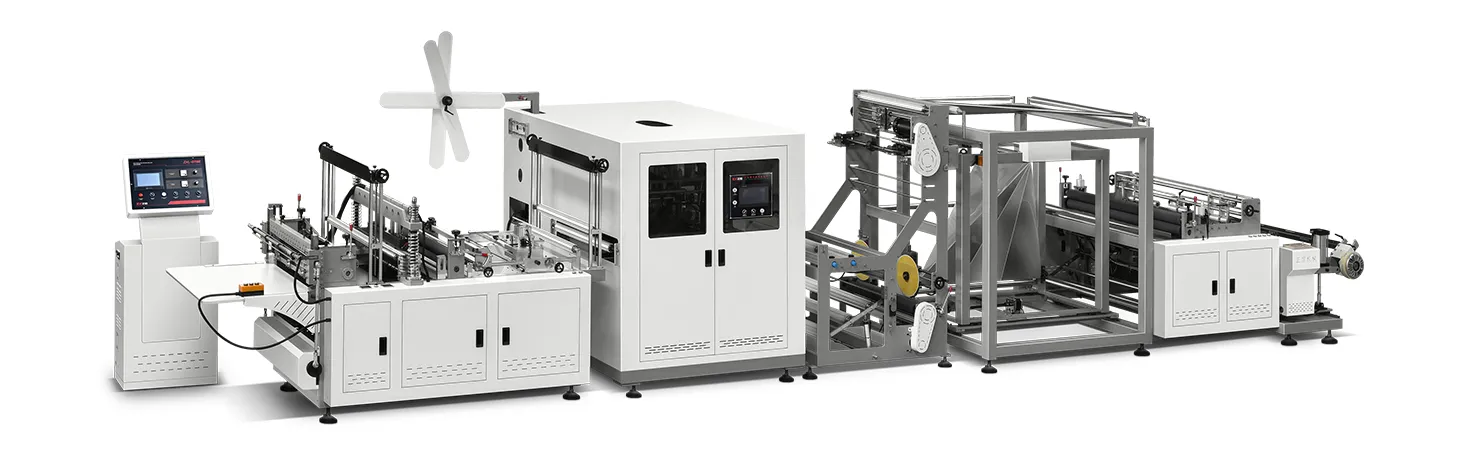
ZXL-A700背心袋无纺布制袋机.webp)
 Português (AO90)
  English
  العربية
  Español
  Русский
  O‘zbekcha
  Қазақ тілі
  Tiếng Việt
  (فارسی (افغانستان
  Kiswahili
  አማርኛ
አማርኛ  தமிழ்
தமிழ்  Bahasa Indonesia
  اردو
اردو  हिन्दी
  বাংলা
বাংলা