
-
Rising labor costs, unstable qualitydan plastic-ban pressure can weaken competitiveness; without modernization, manufacturers risk lost orders, shrinking marginsdan market exit. Automated non-woven production offers a practical path forward.
The future of a non-woven bags manufacturing unit lies in automated, intelligent, and precision-based production supported by versatile bag-making equipment. Manufacturers that adopt efficient, stable, and eco-oriented machinery can respond faster to plastic-ban policies, diversify bag applications, reduce operating costs, and strengthen long-term competitiveness in both domestic and export markets.
The long-term outlook becomes clearer when production technology, market demanddan policy direction are considered together.
Why the future remains promising
The future of a non-woven bags manufacturing unit is closely linked to the global shift away from single-use plastic packaging. As more countries and regions tighten restrictions on plastic bags, demand continues to move toward reusable, recyclabledan policy-compliant alternatives. Non-woven bags are well positioned in this transition because they can serve a wide range of applications, including shopping, food and beverage packaging, clothing, gifts, takeaway, insulation, and other daily-use packaging needs.
A manufacturing unit that can supply multiple bag styles dengan reliable quality is more likely to stay competitive as customer requirements become increasingly specialized and regulation-driven. This means the future is not only about producing bags, but about producing the right products for the right markets with the right production system.
Automation will shape the next stage of growth
One of the clearest features of a future-ready manufacturing unit is automation. Non-woven bag machinery is moving toward intelligence, automationdan precision, and this trend matters because profitability increasingly depends on consistent output, reduced labor dependencedan shorter delivery cycles.
Automated systems help manufacturers:
- Standardize production quality
- Reduce manual errors
- Lower labor intensity
- Improve production efficiency
- Support more stable long-term operation
For buyers comparing suppliers, the ability to deliver produksi yang stabil dengan less downtime is becoming just as important as competitive pricing. In this sense, future competitiveness will depend not only on owning a machine, but on owning the right machine configuration.
Product versatility creates stronger market opportunities
Another major factor influencing the future of a non-woven bags manufacturing unit is multifunctionality. A factory with equipment capable of producing different bag types has a much broader business horizon than one limited to only a few standard products.
Advanced non-woven bag making equipment can support the production of:
- Food and beverage bags
- Tas anggur
- Tas pakaian
- Tas sepatu dan topi
- Tas hadiah
- Takeaway bags
- Insulation bags
This flexibility allows manufacturers to respond more effectively to seasonal demand, customized ordersdan changing customer preferences. A versatile manufacturing unit is also better prepared to enter different sectors and reduce reliance on a single product category.
Material adaptability will become more important
The future of the industry also favors manufacturing units that can adapt to different raw materials. Modern equipment can work with a variety of materials, such as non-woven fabrics, kain komposit laminasi, PP materials, film transparan, bahan tenundan laminated fabrics.
This level of adaptability offers several advantages:
- It improves the ability to meet different customer specifications
- It supports broader product development
- It reduces the risk of depending on one single raw material source
- It helps manufacturers stay flexible when market supply conditions change
In the years ahead, units with broader material compatibility will likely be in a stronger position to handle both custom orders dan market fluctuations.
Sustainability will no longer be optional
Environmental protection is no longer just a branding advantage. In many markets, it has become a basic purchasing condition. That is why the future of a non-woven bags manufacturing unit is closely tied to the ability to balance keberlanjutan dengan productivity.
Advanced equipment with energy-saving dan environmental protection features can help manufacturers:
- Reduce unnecessary waste
- Improve resource efficiency
- Support greener production goals
- Better align with packaging regulations in export markets
The next stage of development is not simply about producing more bags. It is about producing them with lower waste, better efficiencydan stronger environmental compliance. Manufacturers that can present themselves as both efficient dan environmentally responsible will be better positioned in competitive domestic and international markets.
Stability and scalability will define long-term value
In the future, customers are likely to place even greater value on stable machine performance. A manufacturing unit that suffers from frequent downtime, unstable bag quality, or delayed delivery can quickly lose trust in both domestic and export business.
Stable production performance helps manufacturers:
- Protect delivery schedules
- Maintain consistent product quality
- Improve customer satisfaction
- Reduce maintenance-related interruptions
- Support long-term business relationships
At the same time, scalability will be essential for growing factories. Many manufacturers begin with simple shopping bags and later expand into box bags, laminated bags, atau custom promotional packaging. Equipment with strong scalability allows a manufacturing unit to grow step by step without needing to replace its entire system too early.
For factories in emerging markets especially, scalable machinery offers a more practical way to control investment while preparing for long-term expansion.
What the future manufacturing unit will look like
The most promising non-woven bags manufacturing units will likely combine five core strengths:
- Automation
- Product diversity
- Material adaptability
- Environmental alignment
- Stable output
The future is not limited to volume manufacturing alone. It will increasingly be shaped by the ability to respond quickly to customer specifications, comply with regulatory packaging requirements, and maintain efficient production with fewer operational disruptions.
In that sense, the manufacturing unit of the future is best understood as a flexible, technology-drivendan market-responsive operation rather than a traditional low-cost workshop.
Modern, automated, and flexible non-woven bag manufacturing units are better positioned to capture future demand, improve efficiency, and grow sustainably.
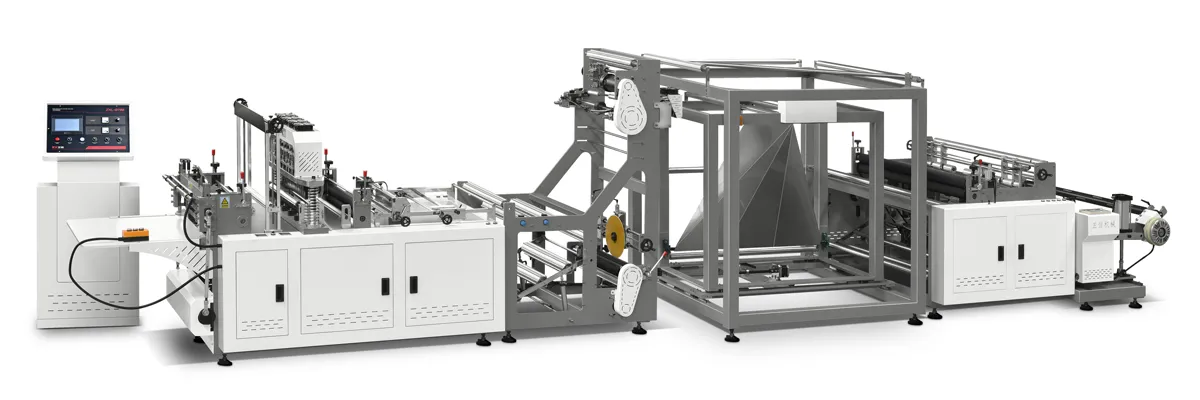
Mesin Pembuat Tas D-cut Non-anyaman ZXL-B700
- Teknologi Penyegelan Ultrasonik
- Produksi Otomatis yang Efisien
- Biaya produksi rendah
ZXL-A700背心袋无纺布制袋机.webp)
 Bahasa Indonesia
  English
  العربية
  Español
  Русский
  O‘zbekcha
  Қазақ тілі
  Português (AO90)
  Tiếng Việt
  (فارسی (افغانستان
  Kiswahili
  አማርኛ
አማርኛ  தமிழ்
தமிழ்  اردو
اردو  हिन्दी
  বাংলা
বাংলা