
Machine downtime, poor bag quality, and material waste often result from incorrect operation. These issues increase production costs, delay deliveries, and reduce profits. Understanding the correct operating procedures helps manufacturers achieve stable, efficient, and high-quality production.
Operating a non woven bag making machine involves preparing raw materials, checking machine settings, adjusting production parameters, monitoring bag quality, and performing routine maintenance. Following a standardized operating process improves efficiency, reduces waste, and ensures consistent production of high-quality non woven bags for various commercial applications.
Proper machine operation is the foundation of efficient non woven bag manufacturing. The following guide explains each step in detail.
Understanding the Non Woven Bag Making Machine
A non woven bag making machine is designed to convert non woven fabric rolls into finished bags through processes such as feeding, folding, welding, cutting, and handle attachment. Modern equipment is increasingly intelligent, automated, and precise, allowing manufacturers to achieve higher productivity and product consistency.
These machines can produce a wide variety of products, including:
- ক্রয় ব্যাগ
- টি-শার্ট ব্যাগ
- বক্স ব্যাগ
- উপহারের ব্যাগ
- Food packaging bags
- টেকঅ্যাওয়ে ব্যাগ
- ইন্সুলেটেড ব্যাগ
- প্রচারমূলক ব্যাগ
Many advanced machines are compatible with multiple materials, including non woven fabrics, laminated fabrics, PP materials, transparent films, and woven materials.
Step 1: Prepare Raw Materials
Before starting production, operators should inspect the raw material rolls carefully.
Key checks include:
- Fabric width and thickness
- Material quality and cleanliness
- Roll alignment
- Surface defects or damage
- Printing accuracy (if pre-printed fabric is used)
The material roll should be mounted securely on the unwinding unit. Improper installation can cause tracking issues, wrinkles, or material wastage during production.
Operators should also confirm that the selected material matches the production order requirements.
Step 2: Perform Machine Inspection
Before powering on the machine, conduct a comprehensive inspection.
Verify the following:
- Electrical connections are secure.
- Ultrasonic welding systems are functioning properly.
- Air pressure systems operate within recommended ranges.
- Moving parts are lubricated.
- Safety guards are installed correctly.
- Emergency stop buttons are functional.
Modern non woven bag making machines often feature touch-screen control systems that simplify machine setup and operation. Operators should ensure all system parameters are correctly loaded before production begins.
Step 3: Configure Production Parameters
After inspection, operators must input production specifications.
Common settings include:
| পরামিতি | Purpose |
|---|---|
| Bag length | Controls finished bag size |
| ব্যাগের প্রস্থ | Determines bag dimensions |
| Welding temperature | Ensures strong seals |
| উৎপাদন গতি | Controls output rate |
| Handle position | Ensures accurate placement |
| Cutting length | Maintains dimensional consistency |
It is recommended to start with a moderate production speed when running a new order. Once product quality is verified, the speed can be gradually increased.
Step 4: Conduct a Trial Run
Before mass production, perform a short test run.
Inspect the sample bags for:
- Correct dimensions
- Strong welding strength
- Clean cutting edges
- Accurate printing alignment
- Proper handle attachment
- Overall appearance
Any deviations should be corrected immediately by adjusting machine parameters.
A successful trial run minimizes material waste and prevents large-scale production defects.
Step 5: Begin Full Production
Once sample quality meets requirements, full production can begin.
During operation, operators should continuously monitor:
- Fabric feeding stability
- Ultrasonic welding performance
- Cutting accuracy
- Bag stacking quality
- Machine vibration
- Noise levels
One major advantage of modern equipment is its high level of automation. Automated production helps reduce labor requirements, improve consistency, and increase manufacturing efficiency.
Regular quality inspections should be performed throughout the production cycle.
Step 6: Monitor Product Quality
Quality control is essential during continuous production.
Operators should randomly inspect bags at scheduled intervals.
Check for:
- Incomplete welding
- Incorrect dimensions
- Handle defects
- Material wrinkles
- Printing deviations
- Surface contamination
Consistent monitoring helps identify problems before large quantities of defective products are produced.
The combination of automated systems and ultrasonic welding technology allows manufacturers to achieve stable and reliable output while maintaining high product quality.
Step 7: Perform Routine Maintenance
Daily maintenance is critical for long-term machine performance.
Recommended maintenance tasks include:
Daily Maintenance
- Clean machine surfaces
- Remove fabric dust and scraps
- Check air pressure systems
- Inspect ultrasonic welding components
Weekly Maintenance
- Lubricate moving components
- Tighten loose fasteners
- Inspect electrical wiring
- Verify sensor performance
Monthly Maintenance
- Check motor performance
- Inspect bearings and belts
- Test safety systems
- Review production data
Preventive maintenance reduces unexpected downtime and extends equipment lifespan.
Common Operating Mistakes to Avoid
Many production problems result from avoidable operator errors.
Common mistakes include:
- Running the machine without proper inspection.
- Using unsuitable raw materials.
- Ignoring quality checks during production.
- Operating at excessive speeds immediately.
- Neglecting routine maintenance.
- Failing to train operators adequately.
Avoiding these issues improves productivity and reduces operating costs.
Benefits of Proper Machine Operation
When operated correctly, a non woven bag making machine offers several advantages:
- Higher production efficiency
- Lower labor costs
- Reduced material waste
- Stable product quality
- Improved delivery performance
- Greater profitability
Advanced machines equipped with ultrasonic welding technology, automated controls, and multifunctional capabilities can help manufacturers meet diverse market demands while maintaining competitive production costs.
Proper operation, continuous monitoring, and regular maintenance ensure long-term machine reliability, consistent product quality, and sustainable business growth.
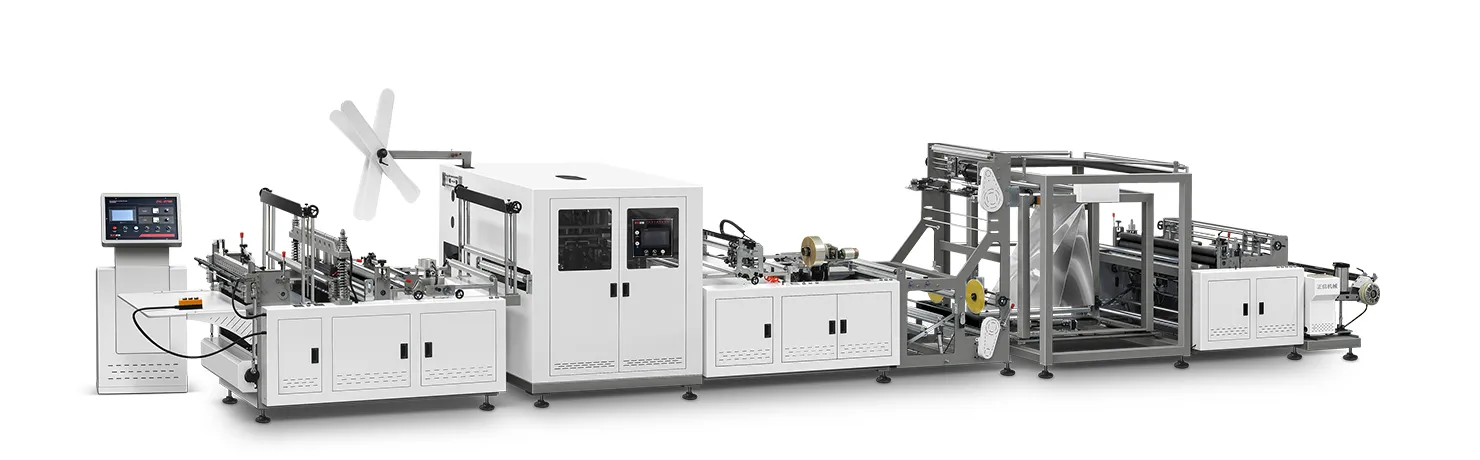
ZXL-A700背心袋无纺布制袋机.webp)
 বাংলা
বাংলা  English
  العربية
  Español
  Русский
  O‘zbekcha
  Қазақ тілі
  Português (AO90)
  Tiếng Việt
  (فارسی (افغانستان
  Kiswahili
  አማርኛ
አማርኛ  தமிழ்
தமிழ்  Bahasa Indonesia
  اردو
اردو  हिन्दी