
⚠️ Unstable operation causes waste, downtime, and delayed delivery. If settings are wrong, bags may tear, seal poorly, or fail inspection. A structured operating process helps maintain stable production.
To operate a non woven bag making machine, the operator should check materials, power, air pressure, ultrasonic welding, touch-screen parameters, cutting size, sealing strength, and finished bag quality before continuous production. Proper setup, trial running, inspection, and routine maintenance help improve output stability and reduce production loss.
👉 The following guide explains the operating process in a practical and production-oriented way.
1. Understand The Machine Before Operation
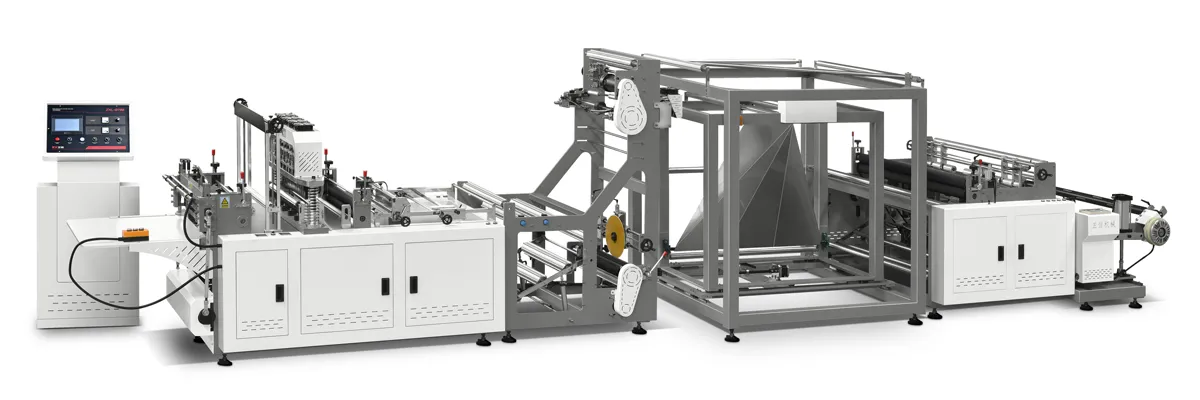
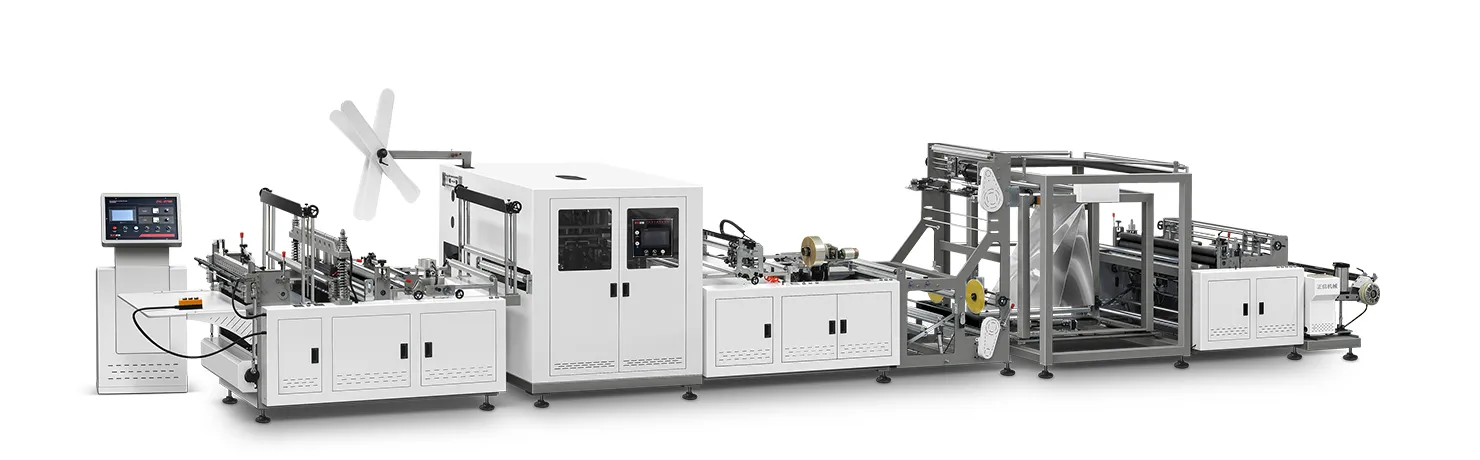
A Mashine ya kutengeneza mifuko isiyofumwa is used to process non-woven fabric and related materials into different bag types, such as shopping bags, T-shirt bags, box bags, carry bags, food bags, gift bags, clothing bags, shoe bags, takeaway bags, and other packaging bags.
Zhejiang Zhengxin Machinery Co., Ltd. produces non-woven bag-making equipment designed for automation, intelligence, precision, and stable production, serving customers in plastic-ban markets and packaging manufacturing industries.
Before starting operation, the operator should understand the basic structure of the machine. A typical Mashine ya kiotomatiki ya kutengeneza mifuko isiyofumwa may include:
✅ Feeding system
✅ Tension control system
✅ Ultrasonic welding unit
✅ Folding device
✅ Cutting device
✅ Punching unit
✅ Touch screen control system
✅ Electrical control cabinet
✅ Counting system
✅ Finished bag collection area
The purpose of understanding these parts is not only to start the equipment, but also to know how each section affects final bag quality.
Kwa mfano, inaccurate feeding may cause size deviation. Weak ultrasonic welding may cause poor sealing. Incorrect cutting settings may result in uneven bag edges. When the operator understands the relationship between each part and the final product, production becomes easier to control.
2. Prepare Materials And Working Conditions
Before operating the Mashine ya kutengeneza mifuko isiyofumwa, the operator should prepare the correct raw material according to the required bag type. Common materials may include non-woven bare fabric, laminated composite fabric, PP material, transparent film, woven material, and laminated fabric.
The material roll should be clean, flat, and suitable for machine processing.
The operator should confirm:
✅ Fabric width
✅ Fabric thickness
✅ Roll direction
✅ Material color
✅ Printing position
✅ Required bag size
✅ Handle type
✅ Sealing position
✅ Folding method
✅ Packing quantity
If the material is printed, the printing mark should be aligned correctly with the bag-making direction. If the machine will produce customized bags, the operator should also check the customer’s required bag size, handle type, sealing position, folding method, and packing quantity.
The working environment should also be checked. The machine should be placed on a stable floor. The power supply should match the machine requirement. Air pressure should be stable if pneumatic components are used.
⚙️ The machine surface should be clean, and no tools, waste fabric, or unrelated objects should remain near moving parts.
3. Check The Machine Before Starting
A pre-start inspection is necessary for safe and stable operation. The operator should check whether all screws, rollers, belts, cylinders, sensors, and electrical parts are in normal condition.
The emergency stop button should be tested. The lubrication points should be checked according to the maintenance requirements.
Lile ultrasonic welding system should be inspected carefully because it directly affects bag strength. The welding horn should be clean, properly installed, and free from visible damage.
Key welding items include:
✅ Welding pressure
✅ Welding time
✅ Welding horn condition
✅ Material thickness
✅ Welding position
If the welding setting is too weak, the bag may open during use. If it is too strong, the material may burn, deform, or become brittle.
The operator should also check the cutting knife, punching device, folding plate, conveyor belt, and finished bag collection area. Any abnormal wear or blockage should be handled before production starts.
4. Set Parameters On The Touch Screen
Many modern non woven bag making machines use a Mfumo wa udhibiti wa skrini ya rangi ya kugusa. This type of interface is designed to be clear, simple, and easy to understand.
The operator can set production parameters according to the required bag specification.
Common settings include:
✅ Bag length
✅ Production speed
✅ Counting quantity
✅ Sealing time
✅ Welding position
✅ Cutting position
✅ Punching position
✅ Feeding speed
✅ Alarm settings
The operator should enter parameters carefully and compare them with the production order.
At the beginning, the speed should not be set too high. A moderate speed is better for trial production, because it allows the operator to observe feeding, folding, welding, cutting, and collecting more clearly.
After the trial bags meet quality standards, the speed can be increased gradually.
5. Load And Align The Fabric Roll
The fabric roll should be installed on the feeding shaft in the correct direction. The operator should make sure the roll is centered and secured.
The material should pass through the guide rollers, tension device, folding section, welding section, and cutting section according to the machine’s threading path.
Fabric alignment is very important.
⚠️ If the material shifts left or right, the finished bag may become uneven.
The operator should adjust the guide device and tension system until the material runs smoothly. The fabric should be:
✅ Flat
✅ Stable
✅ Free from wrinkles
✅ Not too loose
✅ Not too tight
For printed non-woven bags, the operator should pay special attention to the printing mark position. The sensor should detect the mark accurately, so the cutting and sealing positions match the printed pattern.
6. Run Trial Production
After loading material and setting parameters, the operator should start the machine at low speed. Trial production allows the operator to check whether each process is correct before mass production.
During trial running, several sample bags should be collected and inspected.
The operator should check:
✅ Bag length
✅ Bag width
✅ Sealing strength
✅ Cutting edge
✅ Handle position
✅ Folding accuracy
✅ Bottom shape
✅ Side sealing
✅ Printing alignment
✅ Overall appearance
If the bag size is incorrect, the length and feeding parameters should be adjusted. If the sealing is weak, the ultrasonic welding pressure, welding time, or material compatibility should be checked.
If the cutting edge is uneven, the knife position or cutting pressure should be adjusted. If the fabric wrinkles, the tension and guide rollers should be corrected.
Only after the sample bags meet production requirements should the machine enter continuous production.
7. Monitor Continuous Production
During normal operation, the operator should not leave the machine unattended. Continuous monitoring helps prevent small problems from becoming major production losses.
The operator should observe whether:
✅ Fabric feeding is stable
✅ Ultrasonic welding sound is normal
✅ Cutting action is smooth
✅ Finished bags are collected neatly
✅ Machine speed remains stable
✅ Bag quality remains consistent
Bag samples should be checked regularly during production, not only at the beginning.
Production speed should match material quality and bag complexity. For simple bag types, the machine may run faster. For box bags, laminated bags, or bags with special structures, a more stable speed may be more suitable.
The goal is not only high output, but also consistent quality.
8. Handle Common Operating Problems
If the machine stops automatically, the operator should check the alarm message on the touch screen first.
Common causes may include:
⚠️ Material shortage
⚠️ Sensor failure
⚠️ Fabric deviation
⚠️ Cutting blockage
⚠️ Abnormal air pressure
⚠️ Emergency stop activation
If the bag sealing is not firm, the operator should check ultrasonic welding settings, material thickness, welding horn condition, and welding pressure.
If the bag size changes during production, the feeding roller, tension system, and parameter settings should be reviewed.
If the material shifts, the roll position and guide system should be adjusted.
Operators should avoid repeated blind adjustments. Every adjustment should have a clear reason, and sample bags should be checked after each change.
9. Shut Down And Maintain The Machine
After production is completed, the operator should reduce the speed, stop feeding material, and turn off the machine according to the standard shutdown procedure.
Waste fabric should be removed. The machine surface, rollers, cutting area, welding area, and collection area should be cleaned.
Routine maintenance is important for long-term machine stability.
The operator should regularly check:
✅ Lubrication
✅ Screws
✅ Belts
✅ Sensors
✅ Electrical wiring
✅ Air pipes
✅ Ultrasonic parts
✅ Cutting tools
Good maintenance helps reduce downtime, improve production efficiency, and extend machine service life.
A Mashine ya kutengeneza mifuko isiyofumwa is not only production equipment, but also an important tool for packaging manufacturers to reduce labor cost, improve delivery capacity, and meet diverse market needs.
Stable operation depends on correct setup, careful trial running, continuous inspection, and regular maintenance.
 Kiswahili
  English
  العربية
  Español
  Русский
  O‘zbekcha
  Қазақ тілі
  Português (AO90)
  Tiếng Việt
  (فارسی (افغانستان
  አማርኛ
አማርኛ  தமிழ்
தமிழ்  Bahasa Indonesia
  اردو
اردو  हिन्दी
  বাংলা
বাংলা